Two Routes to the Same Crystal
Natural diamond crystallises from carbon under pressures exceeding 45 kilobars and temperatures above 900 °C, at depths of 150 kilometres or more, over geological timescales measured in hundreds of millions of years. Two industrial processes replicate the chemistry without the geology.
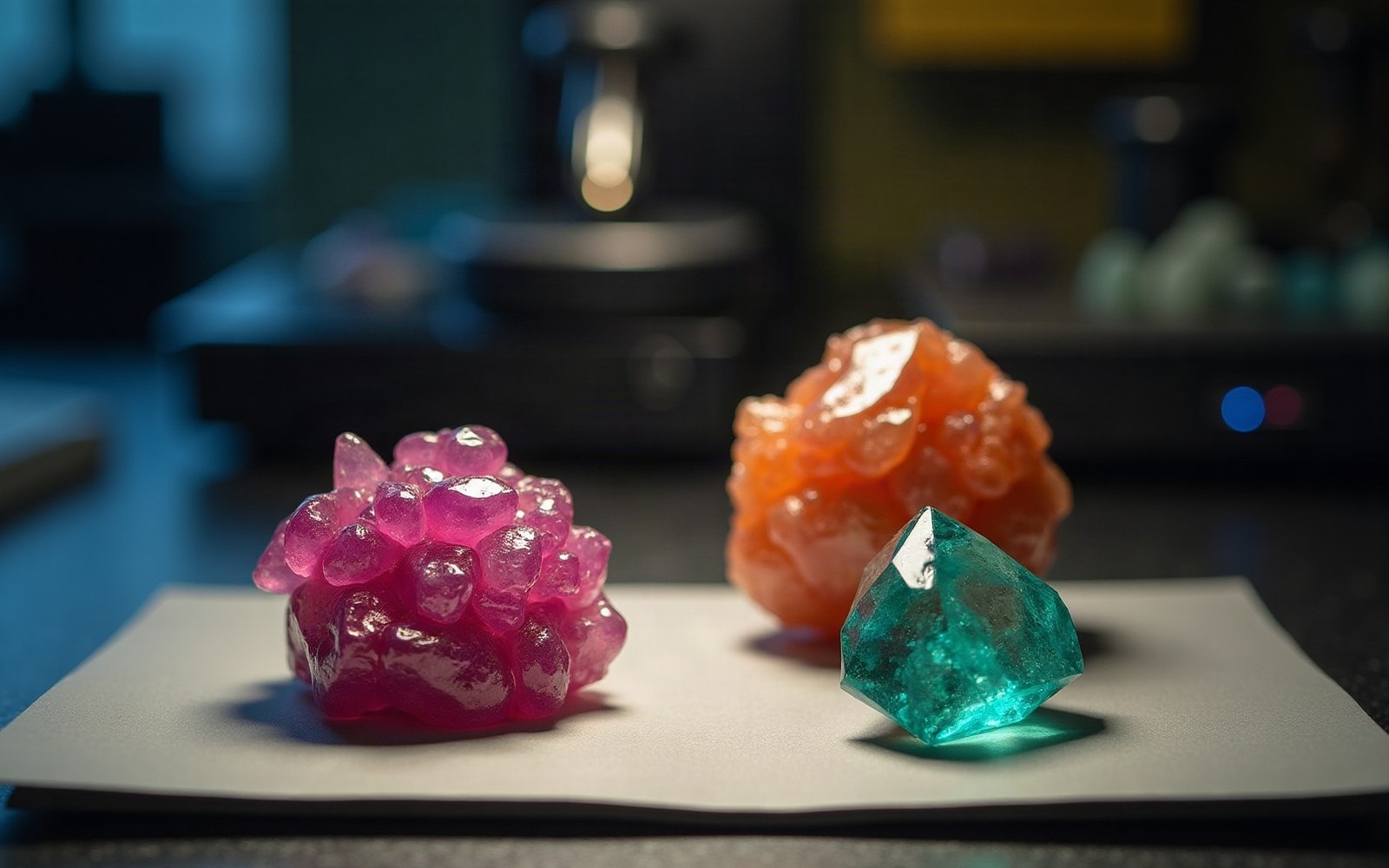
High-pressure high-temperature synthesis — HPHT — was developed commercially in the 1950s and mimics the mantle environment directly. A carbon source, typically graphite or diamond powder, is dissolved in a molten metal flux of iron, nickel or cobalt and deposited onto a seed crystal held at conditions close to the diamond stability field. The result grows over days rather than aeons, and the geometry of that growth leaves a recognisable signature: crystals tend to form as cuboctahedra, with distinct growth sectors corresponding to the different crystal faces that advanced during synthesis.
Also in Diamond: Four Letters the GIA Fixed in 1953
Photo: Plato Terentev / Pexels
Chemical vapour deposition — CVD — takes an entirely different route. A hydrocarbon gas, usually methane, is introduced into a low-pressure reactor chamber and broken apart by microwave plasma or a hot filament. The freed carbon atoms deposit layer by layer onto a substrate, typically a thin diamond wafer, building a slab rather than a polyhedron. CVD operates at far lower pressures than HPHT and produces crystals that grow in one direction, which creates a columnar internal structure quite unlike either the mantle product or the flux-grown stone.
Both processes are now capable of producing gem-quality material in sizes well above one carat. The Gemological Institute of America began issuing grading reports for laboratory-grown diamonds in 2007, applying the same colour and clarity language used for natural stones while clearly distinguishing origin.
What the Laboratory Sees
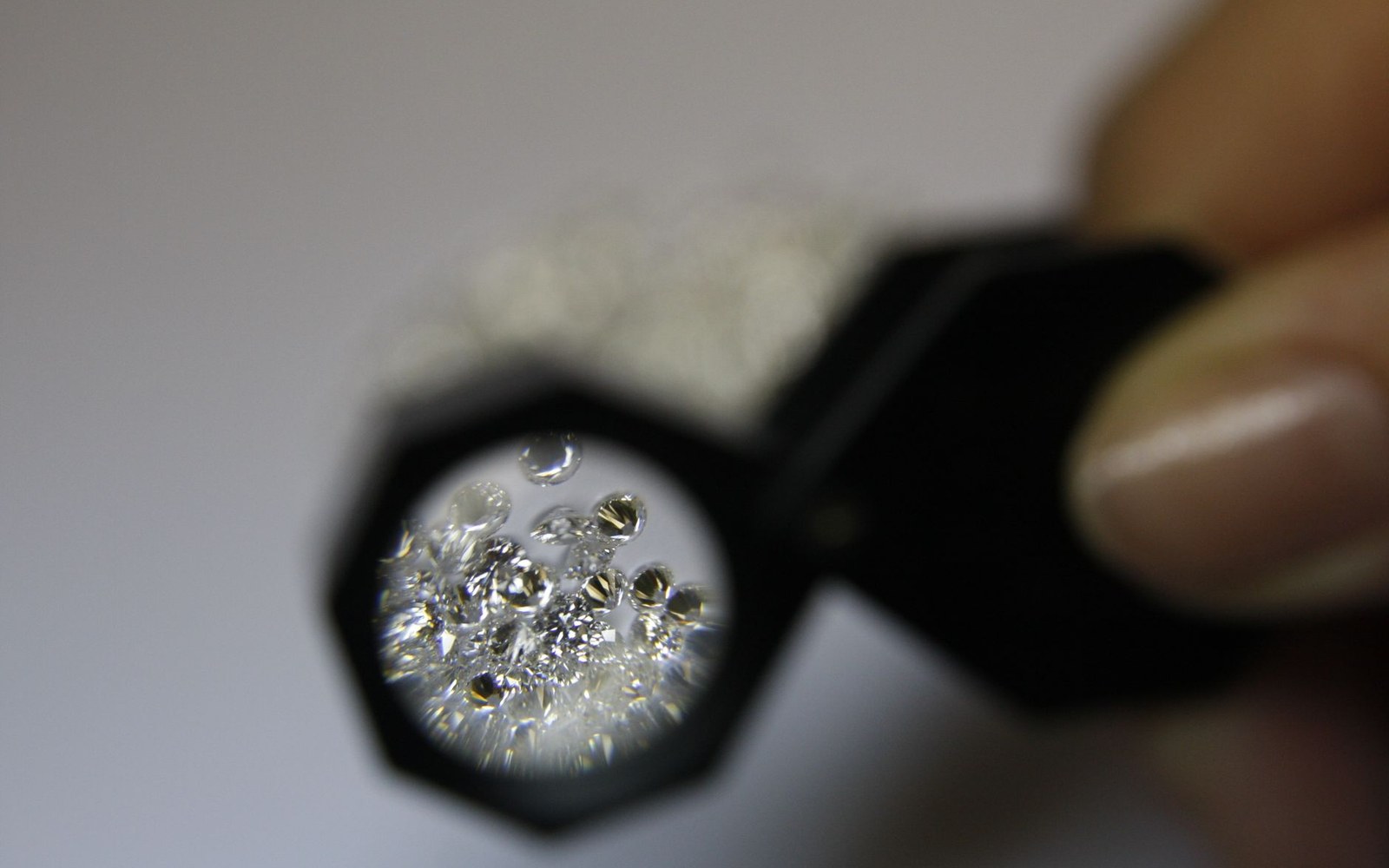
The eight carbon atoms in a diamond unit cell are identical whether the source was Kimberley kimberlite or a reactor in Surat. Routine gemmological instruments — refractometer, polariscope, specific gravity — return the same readings for all three types. Separation requires spectroscopy and microscopy.
The key spectroscopic tool is infrared absorption, which reveals the nitrogen content and, critically, how nitrogen atoms are arranged within the lattice. Natural diamonds are classified by the GIA and the International Gemological Institute as Type Ia, IIa, IIb or IaAB based on this arrangement: in most natural stones, nitrogen has had billions of years to aggregate into pairs (IaA) and clusters (IaB). HPHT-grown diamonds tend to be Type IIa (very low nitrogen) or Type Ib, in which nitrogen is dispersed as isolated atoms rather than aggregates — a configuration that requires prolonged high-temperature annealing to convert, which geological time provides and an industrial reactor does not. CVD stones are also typically Type IIa, but they frequently display a characteristic hydrogen-related absorption band at around 3,123 cm⁻¹ that is rarely seen in natural material and absent in HPHT stones.
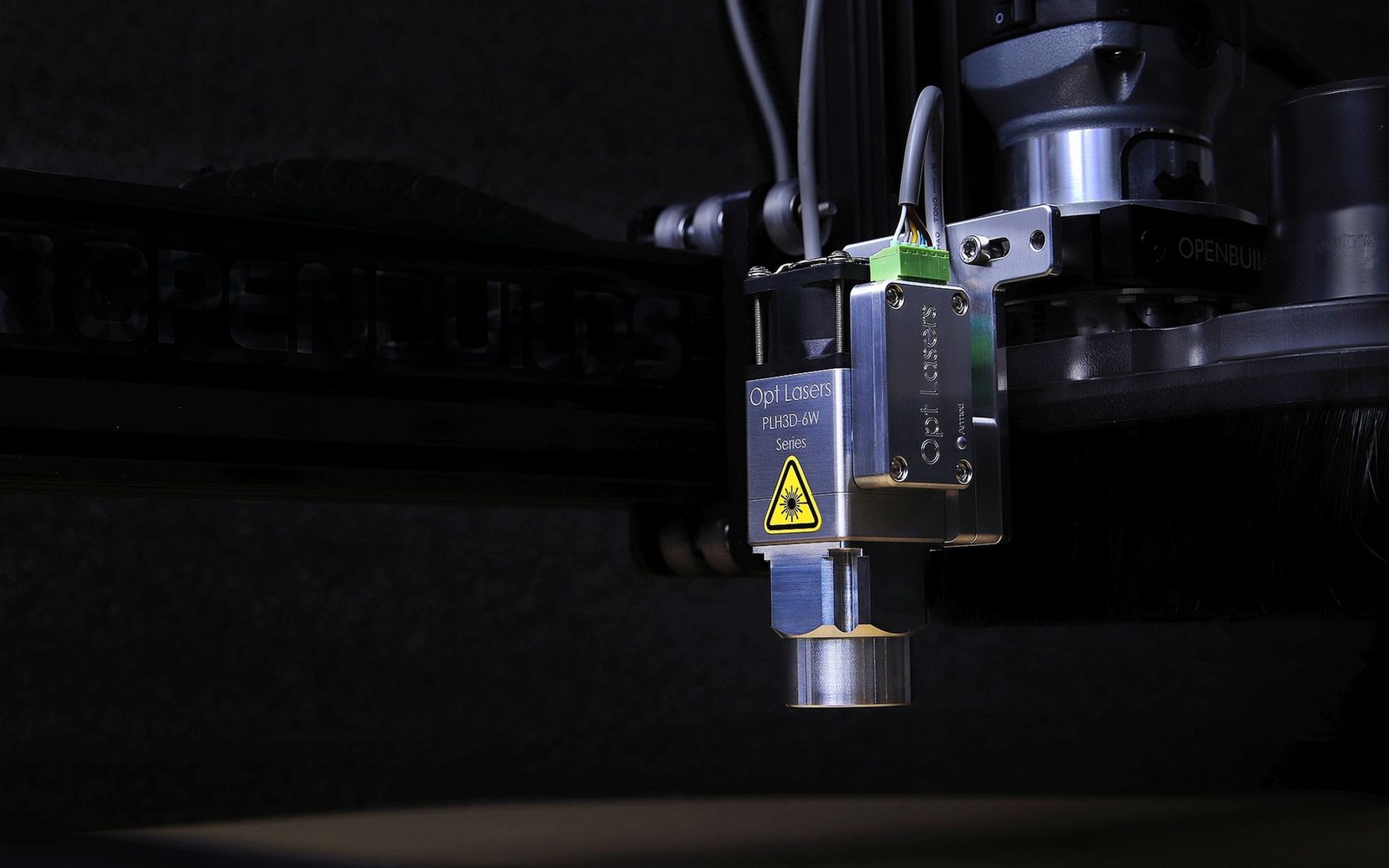
The dop arm holds the stone at a fixed angle and the lap does the work; Tolkowsky's proportions are angles set on this machine.
Photo: Opt Lasers from Poland / Pexels
Photoluminescence spectroscopy, conducted with a laser at low temperature, reveals further detail. CVD diamonds commonly show a peak at 737 nm associated with a silicon-vacancy defect introduced from reactor components; HPHT stones grown in metal flux may carry nickel- and cobalt-related emission lines invisible to the naked eye but diagnostic under the instrument.
Microscopy adds a third layer of evidence. HPHT stones may contain minute metallic flux inclusions — iron-nickel alloys — that are ferromagnetic and will cause a polished stone to move toward a strong rare-earth magnet. CVD stones show no such inclusions but may display distinct growth striations or graphite pinpoints. Natural diamonds carry their own suite of inclusions: mineral crystals of olivine, garnet, or diopside that entered the stone during mantle growth and have no counterpart in any reactor.
Strain patterns under cross-polarised light also differ. Natural diamonds often show complex, irregular strain inherited from geological deformation; CVD stones display regular columnar strain aligned with the deposition direction; HPHT stones show sector-dependent strain that maps onto the cuboctahedral growth geometry.
No single test is conclusive in isolation. The GIA, the Laboratoire français de gemmologie and other accredited laboratories combine infrared, photoluminescence and microscopic observation into a protocol that produces a confident origin determination. The Natural History Museum in London has documented the physical and spectroscopic characteristics of natural diamond in its mineral collections for comparative reference. The carbon is the same; the growth record embedded in the crystal is not.
Related