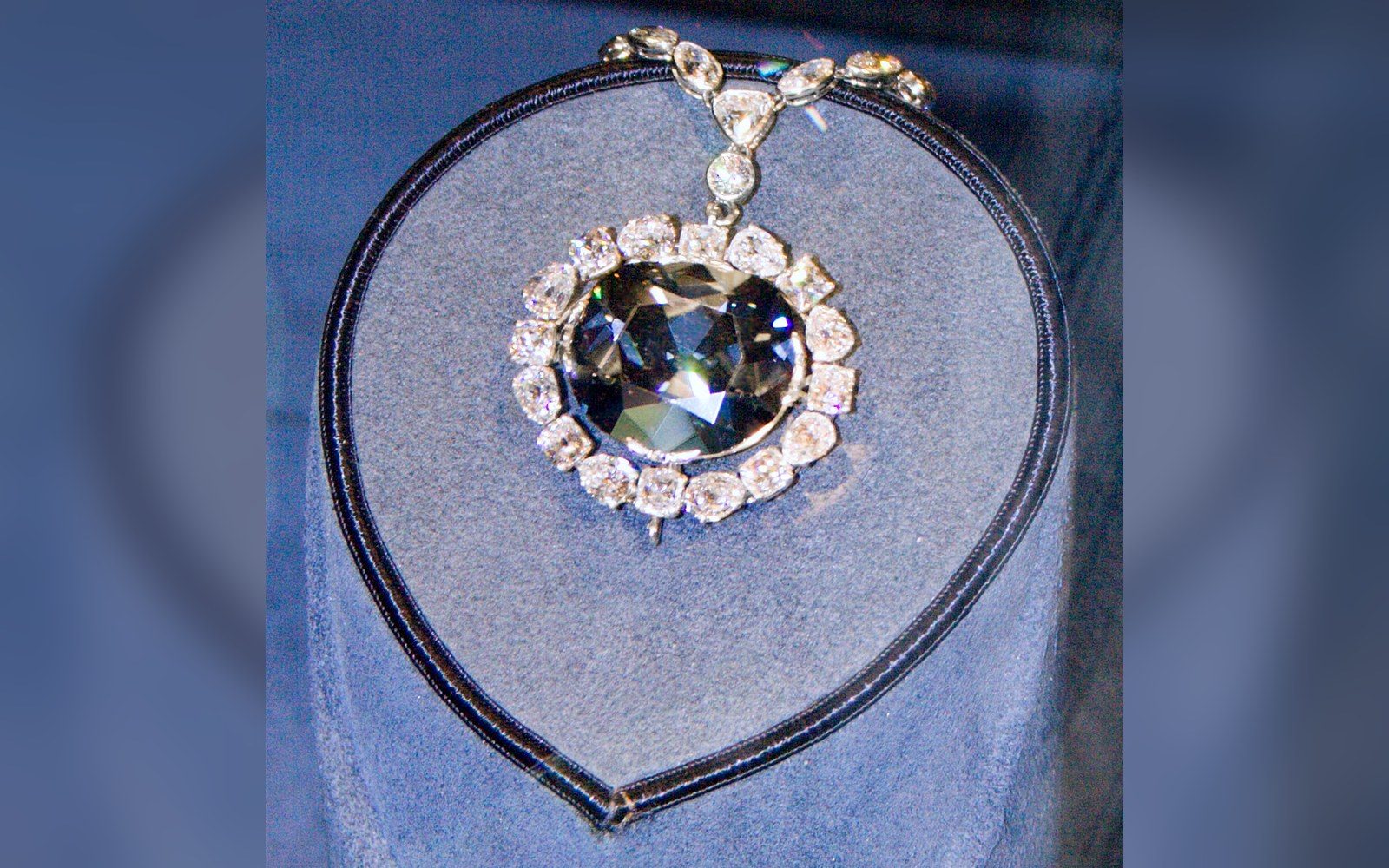
The Hope Diamond on its Winston necklace mount inside the Harry Winston Gallery vitrine, visitors' faces reflected in the glass

Section 07 of 08

Named Stones

Famous individual stones — the Hope Diamond, the Koh-i-Noor, the Cullinan, the Black Prince's Ruby — each with a verified provenance and a documented history.

Individual stones with a weight, a recut, an owner and a current address on record.

Photo: Hope Diamond · Wikimedia Commons
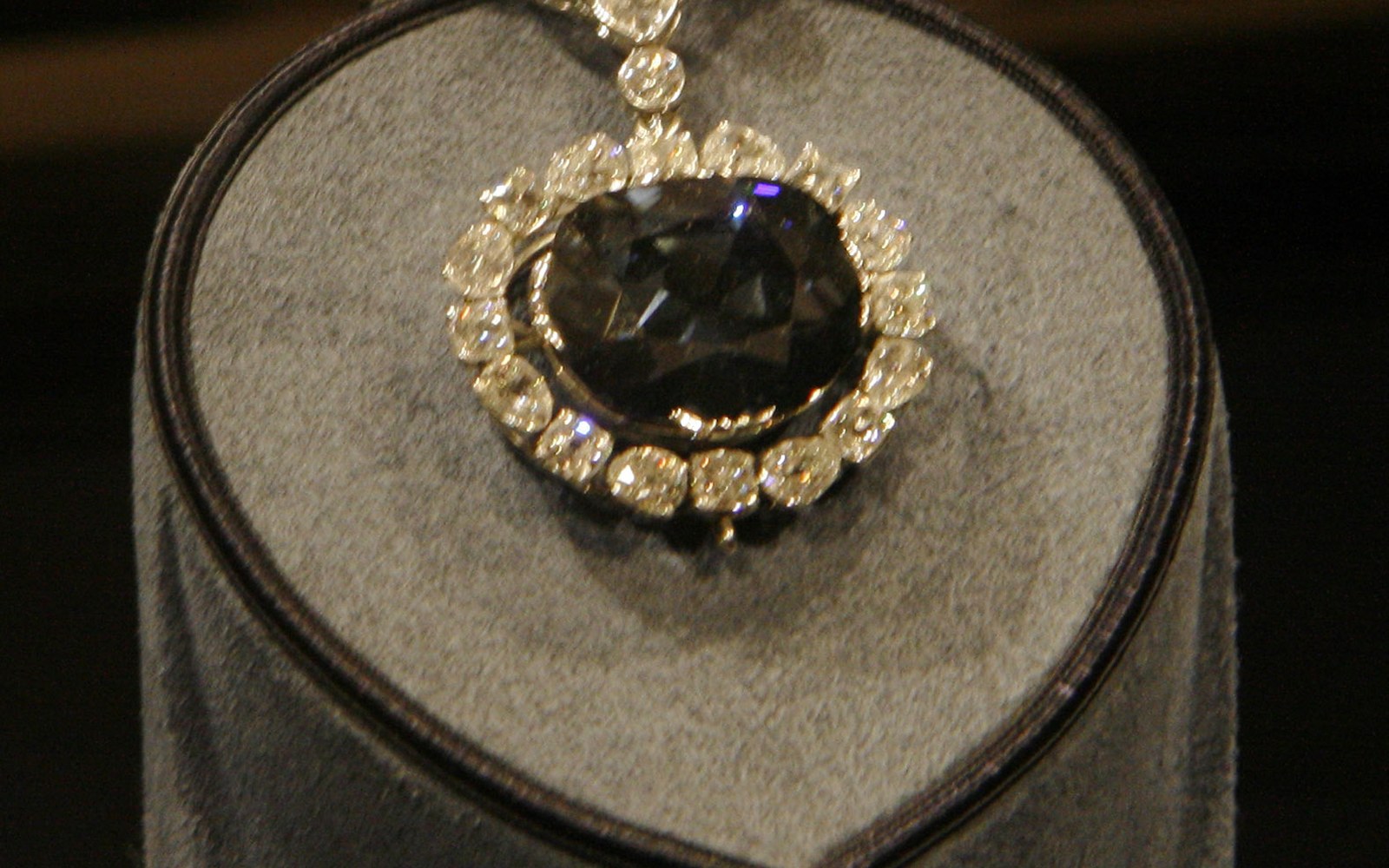
Large blue diamond pendant surrounded by white diamonds on a display mount Lead piece

The Hope Diamond Came to the Smithsonian by Registered Post

Documents the Hope Diamond's 1958 transfer — Harry Winston's registered-mail parcel to the Smithsonian Institution's National Gem Collection — covering the stone's verified chain of ownership from Tavernier's 1666 purchase through the French Blue, the Hope family acquisition and the McLean period.

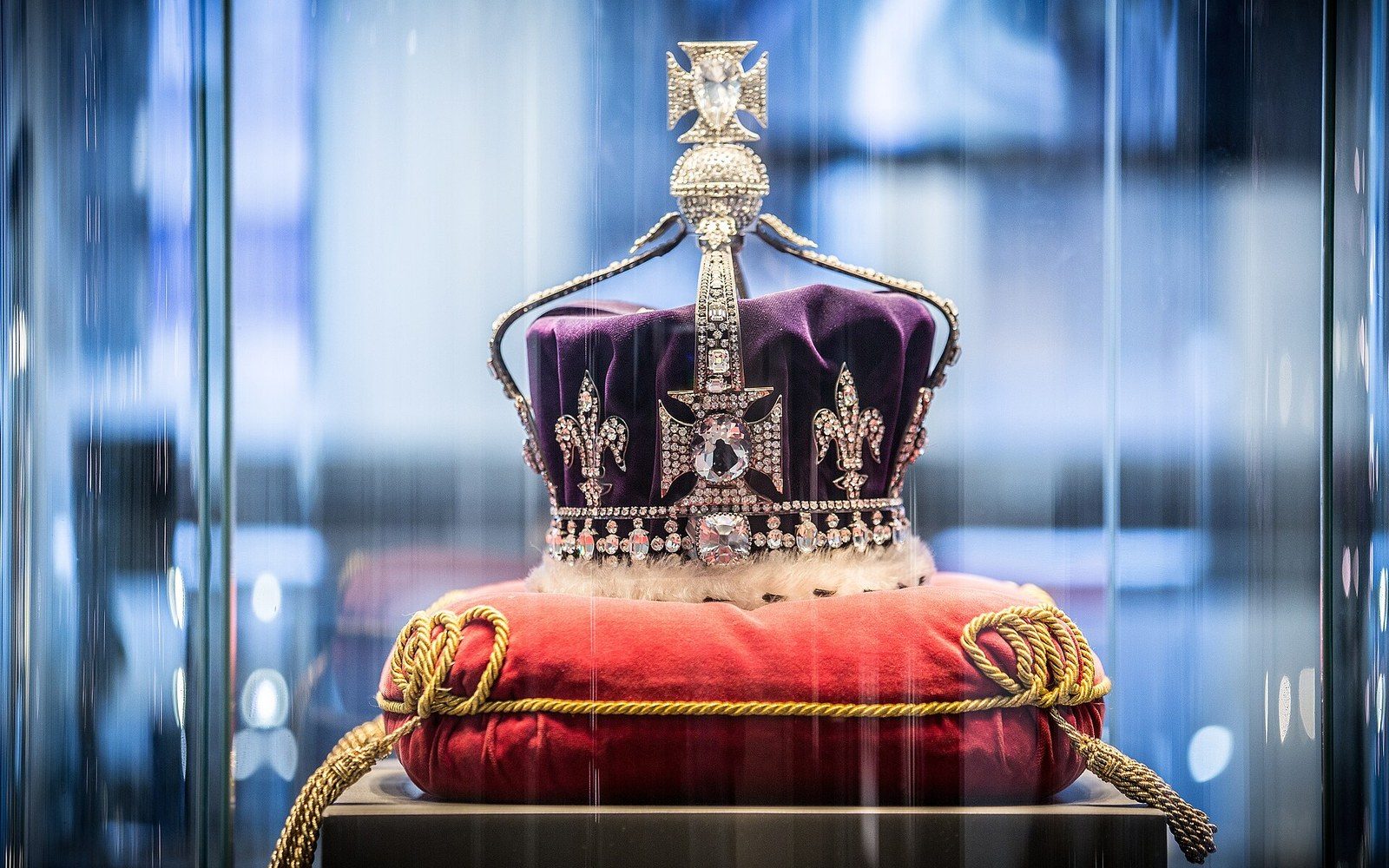
A jewelled crown with a purple velvet cap displayed on a red tasselled cushion in a glass case

Recut in 1852, and It Lost Forty-Two Per Cent of Itself

Documents the Koh-i-Noor's 1851 display at the Great Exhibition — where its lacklustre appearance prompted Prince Albert to commission a recutting — and the 1852 Amsterdam recutting by Garrard under supervision, which reduced it from 186 carats to 105.6 carats (per the Tower of London record).

Named Stones
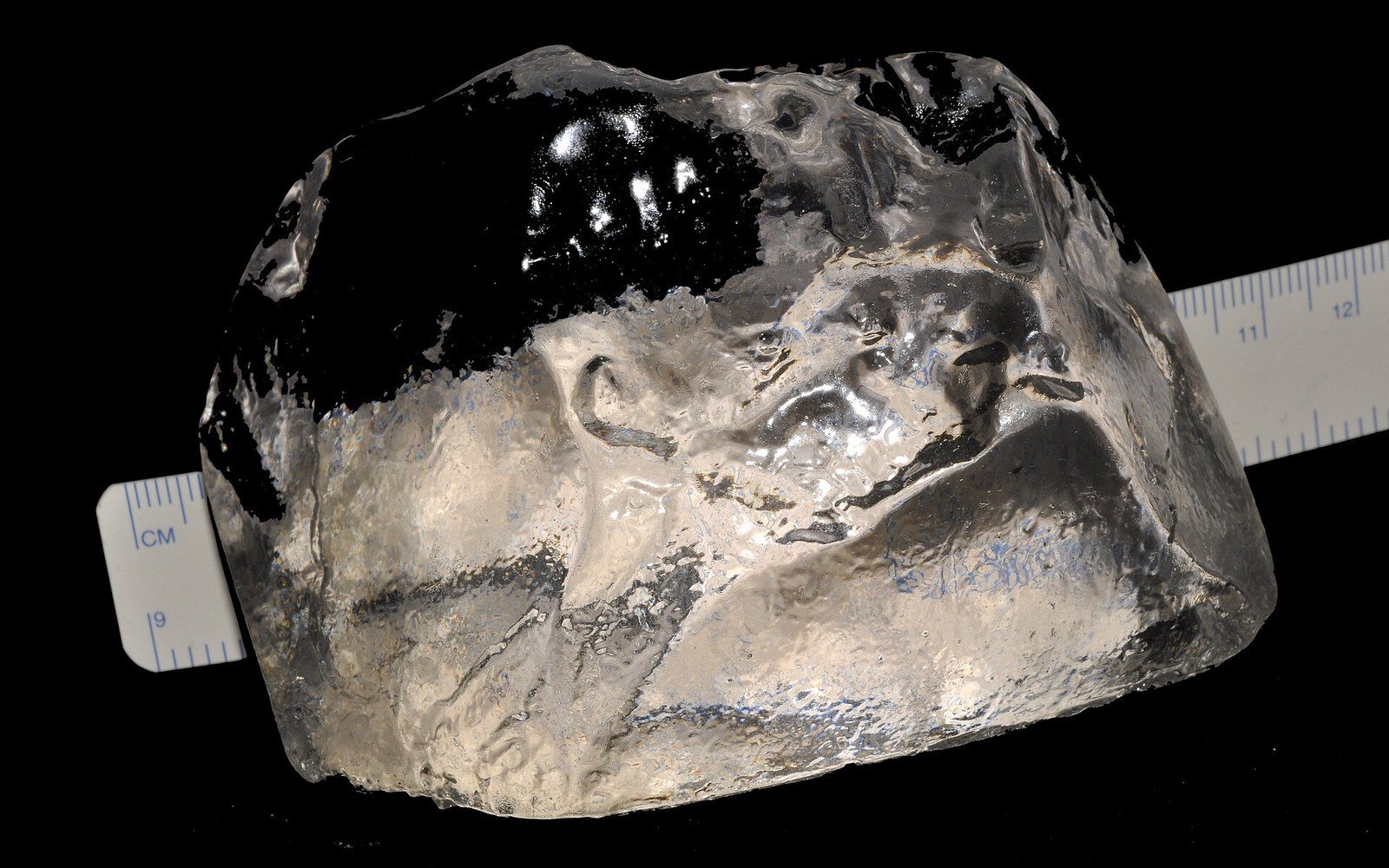
A large rough diamond crystal resting on a centimeter ruler against a black background

Joseph Asscher Struck the Cullinan Once and the Blade Broke

Documents the 1905 Cullinan discovery at the Premier Mine in Transvaal (3,106 carats, per the mine operator's record), the 1907 purchase by the Transvaal government and gift to Edward VII, and the January 1908 cleaving by Joseph Asscher in Amsterdam — the first blade broke on contact; the second produced nine principal stones.

Named Stones
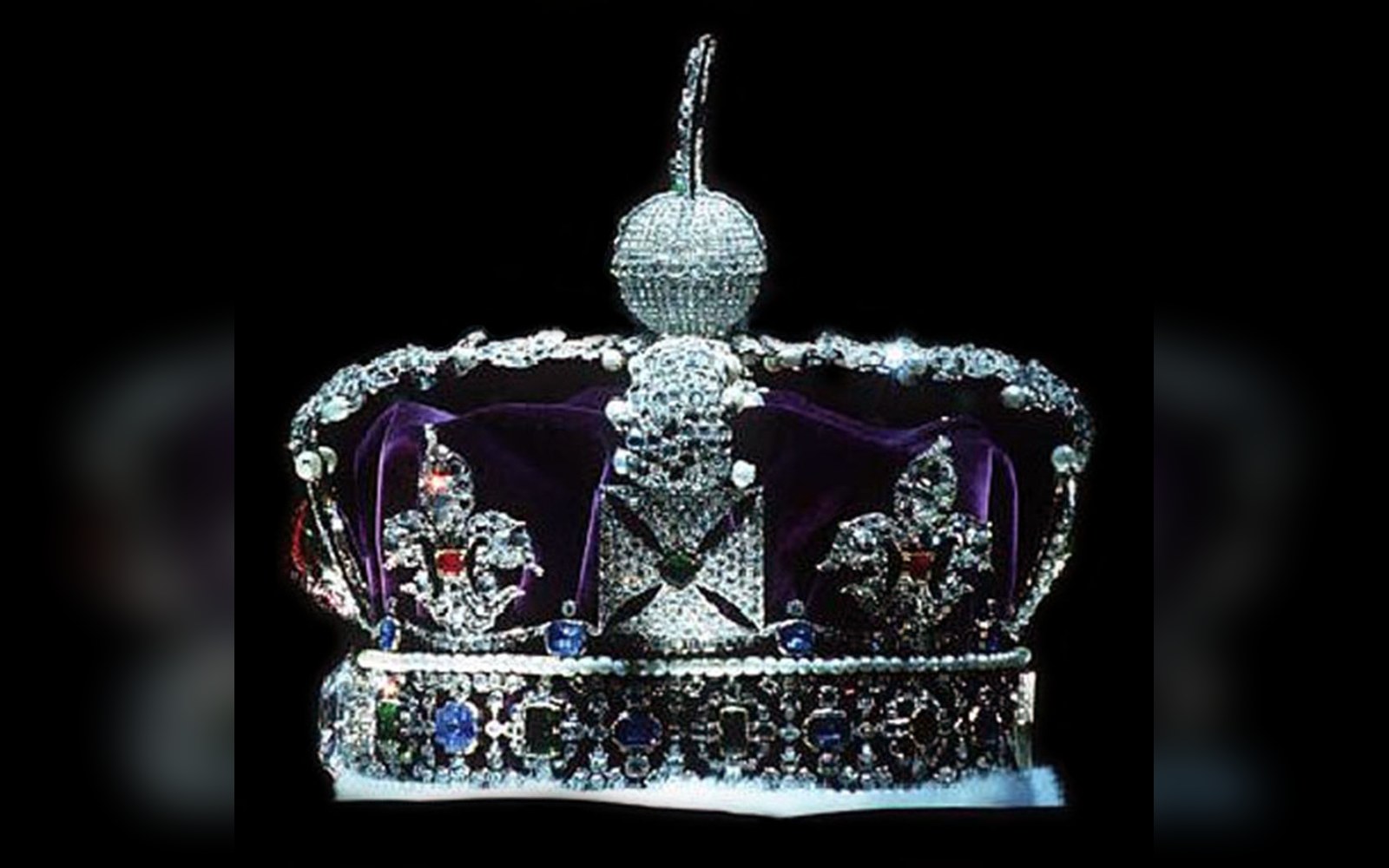
A jewel-encrusted crown with purple velvet cap, pearls, sapphires, and a large red gem on its band

The Black Prince's Ruby Has Not Been a Ruby Since 1783

Documents the spectroscopic identification of the Black Prince's Ruby as spinel by mineralogists in 1783 and its continuous display in the Imperial State Crown since 1838, covering its documented history from the 14th-century Moorish treasury forward.

Named Stones
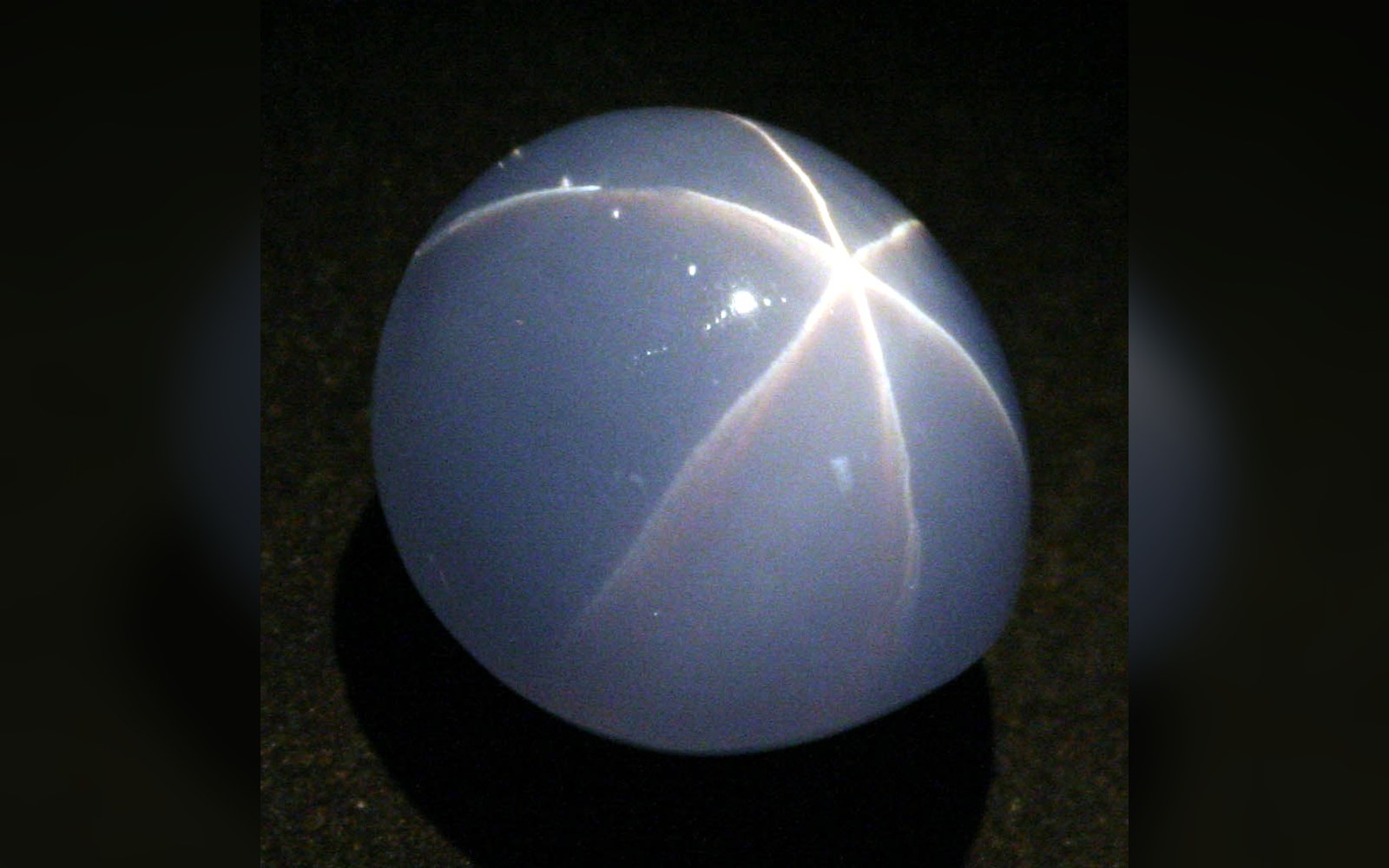
Cabochon-cut star sapphire showing a six-rayed light pattern across its domed surface

The Star of India Went Out Through an Unlocked Window in 1964

Documents the October 1964 theft of the Star of India (563.35 carats, per the American Museum of Natural History) and twenty-three other gems from the J.P.

Named Stones
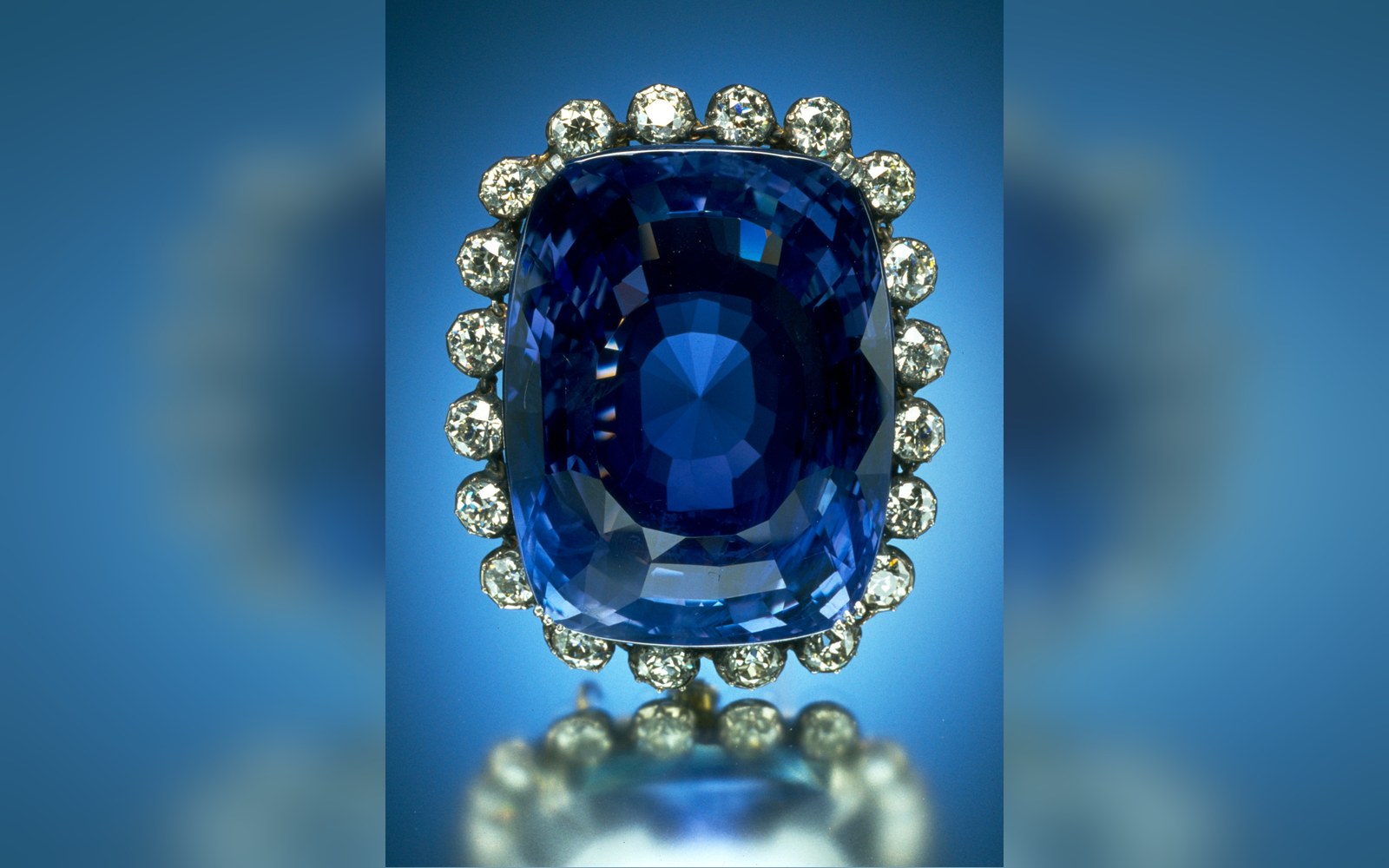
Large cushion-cut blue sapphire surrounded by a ring of diamonds

The Logan Sapphire Is the Size of an Egg and Came from Ratnapura

Documents the Logan Sapphire — 422.99 carats, cushion-cut, Sri Lanka origin, donated to the Smithsonian by Rebecca Pollard Logan in 1960 (per Smithsonian catalogue) — covering the stone's physical dimensions, its position in the National Gem Collection and the Ratnapura deposit geology that produced it.

Named Stones

Everything in Named Stones