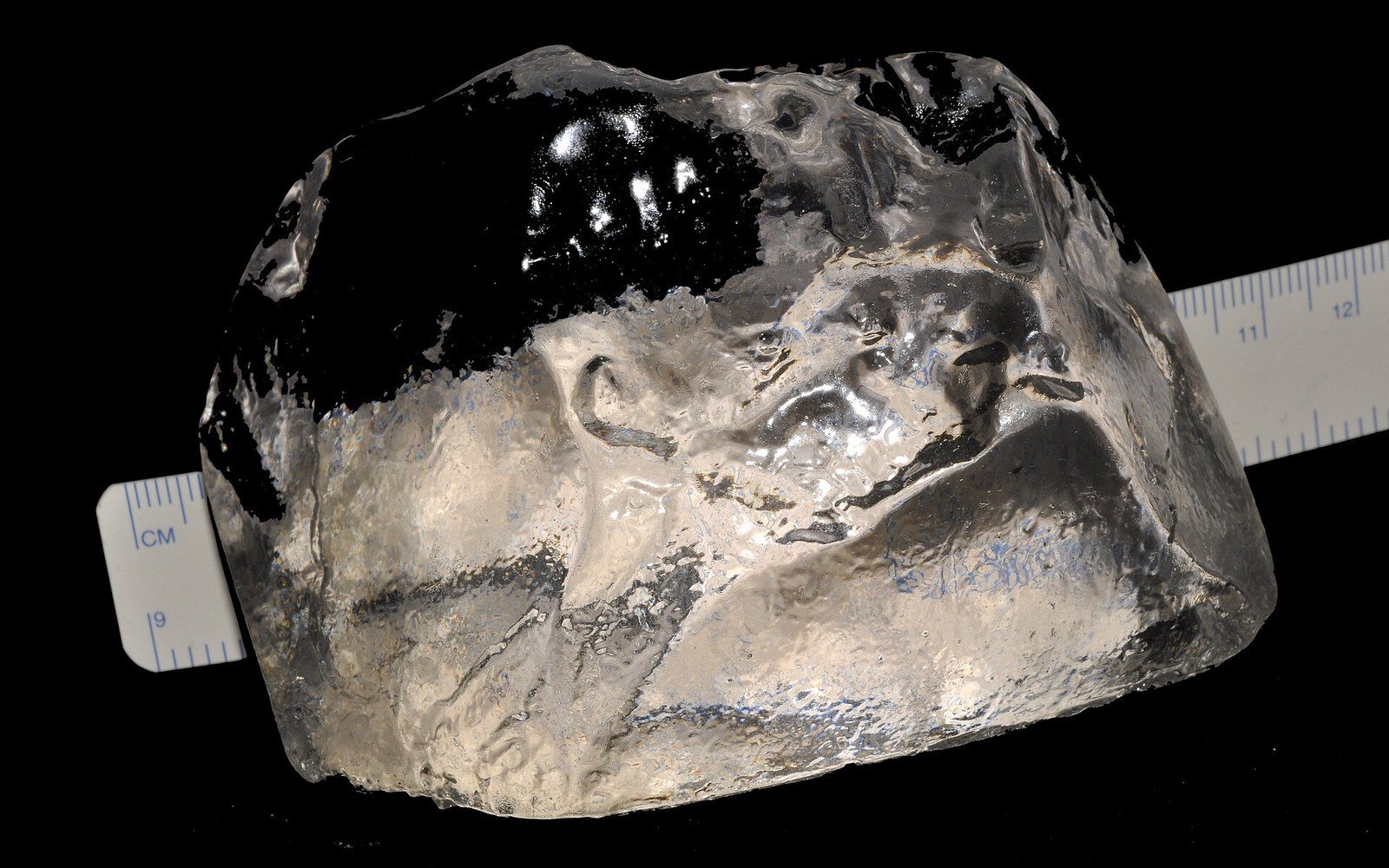
The Stone and the Gift
On 26 January 1905, a mine superintendent at the Premier Mine in Transvaal, South Africa, noticed a glint in the western wall of the open pit. The object was the Cullinan diamond: 3,106 carats of gem-quality rough, roughly the size of a man's fist, and by every recorded measure the largest such stone ever recovered. The Premier Mine, located near Pretoria in what was then the Transvaal Colony, logged the find under that weight in its own records, and the figure has never been seriously disputed.
The stone was named for Thomas Cullinan, the mine's chairman. For two years it sat without a buyer — its scale made it commercially unmanageable for the private market. In 1907 the Transvaal government purchased it and presented it to King Edward VII as a birthday gift, a gesture with unmistakable political overtones: the Boer War had ended only five years earlier, and the gift was framed as a demonstration of loyalty from a recently subjugated colony. Edward VII accepted it on his sixty-sixth birthday, 9 November 1907.
Also in Named Stones: The Hope Diamond Came to the Smithsonian by Registered Post
Photo: The Hope Diamond · Wikimedia Commons
Amsterdam, January 1908
The task of cleaving the Cullinan fell to Joseph Asscher, head of the Asscher Diamond Company in Amsterdam. Cleaving — splitting a diamond along a plane of crystallographic weakness — was the standard method for reducing large rough stones before the saw became dominant in diamond processing. It required first cutting a groove into the stone with another diamond, then inserting a steel blade and striking it sharply. The cutter had to identify the cleavage plane correctly; a mistake would shatter the stone into fragments of sharply reduced value.
Asscher studied the Cullinan for months before acting. On 10 February 1908, before a small group of witnesses in the Asscher firm's Amsterdam workshop, he positioned the blade in the prepared groove and struck it. The blade broke. The Cullinan was unmarked. A second blade was prepared and a second blow delivered; this time the stone cleaved cleanly along the intended plane. Accounts of Asscher fainting after the successful strike circulate widely, but no contemporary documentation supports them — the Asscher company's own historical record does not corroborate the story.
From that first cleave, and subsequent sawing and cleaving over the following months, the rough eventually yielded nine principal stones — designated Cullinan I through IX — along with ninety-six smaller brilliants and a quantity of unpolished fragments. The work was carried out entirely by the Asscher firm.
The Nine Principal Stones
Cullinan I, the Great Star of Africa, weighs 530.2 carats as a pear-shaped brilliant and is mounted in the Sovereign's Sceptre with Cross, held in the Tower of London. Cullinan II, the Lesser Star of Africa at 317.4 carats, is set in the Imperial State Crown. Both figures come from the Royal Collection Trust's documented records. Together they remained, for decades, the two largest cut diamonds in the world. Cullinan III through IX passed to Queen Alexandra and subsequent members of the royal family; several are still worn as personal jewellery by the British royal family and are not permanently displayed.
The Cullinan's cleaving stands as the most consequential single act in the documented history of diamond cutting — not because of the broken blade, which was an occupational hazard of the work, but because of what was at stake: one stone, no duplicate, no rehearsal. Joseph Asscher had correctly read the crystallography of a 3,106-carat diamond, and the second blade proved it.
Related