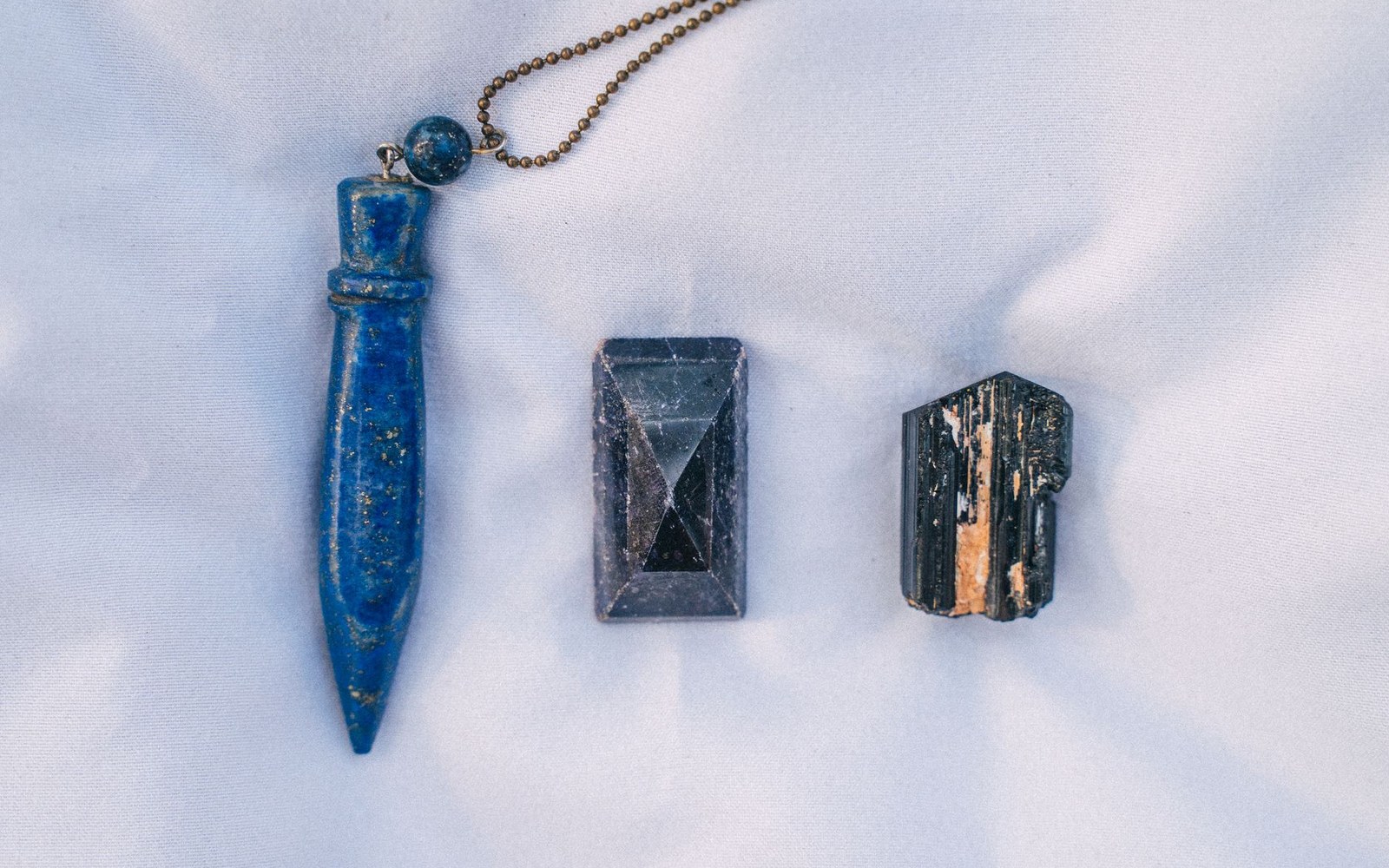
The Mountain and Its Mineralogy
Sar-e-Sang sits in the Kokcha River valley in Badakhshan province, northeastern Afghanistan, at an elevation of roughly 2,500 metres in the Hindu Kush. The workings are not a single pit but a series of galleries cut into marble-hosted limestone on near-vertical cliff faces. Access requires traversing seasonal mountain tracks that close under snow for months at a time — which makes the unbroken duration of extraction across six thousand years a more remarkable fact, not a less remarkable one.
The rock that carries the colour is lazurite, a sulfur-bearing member of the sodalite group of feldspathoid minerals, with the chemical formula (Na,Ca)₈(AlSiO₄)₆(SO₄,S,Cl)₂. Lazurite alone does not make lapis lazuli. The gem material is a contact-metamorphic rock — properly a lazurite-bearing marble — in which lazurite crystals are intergrown with white calcite, grey to white diopside, and flecks of iron pyrite that produce the characteristic gold speckling. The depth and quality of the blue depends on the concentration of lazurite, the chromophore being the trisulfur radical anion (S₃⁻) trapped within the aluminosilicate cage. Material that is predominantly white calcite with sparse blue is graded out as commercial quality; the finest blocks carry an intense, saturated violet-blue with minimal calcite veining. The pyrite, while decorative in moderate amounts, oxidises to rust-coloured staining when present in excess, which degrades the value of a piece.

Also in The Drawer: Spinel Borrowed Ruby's Colour, Mine, and Name
Photo: Arrival of the Imperial State Crown · Wikimedia Commons
The Sar-e-Sang deposit is the only major documented geological source capable of producing gem-quality lazurite marble at the volume the historical trade required. Deposits exist in Siberia's Lake Baikal region, in Chile's Atacama, and in smaller occurrences in the United States, Pakistan and Myanmar — but none approaches the consistent quality or the recorded supply chain of the Badakhshan workings.
Six Thousand Years of the Same Blue
Archaeological evidence for Sar-e-Sang material in the broader ancient world is extensive and well attributed. Lapis lazuli artefacts excavated from the Royal Cemetery of Ur, dated to approximately 2600–2400 BCE and now held across the collections of the British Museum and the Penn Museum, include inlaid panels, cylinder seals and jewellery that geochemical sourcing studies have consistently traced to the Badakhshan source. The lazurite mineralogy is distinctive enough — and alternate geological sources rare enough — that provenance attribution carries reasonable scientific confidence.
The Egyptian record is earlier still. Lapis lazuli appears in predynastic burials from approximately 4000 BCE, confirmed in the archaeological literature associated with sites including Naqada. By the New Kingdom, the stone was used extensively in royal jewellery and funerary equipment: the burial assemblage of Tutankhamun, excavated by Howard Carter beginning in 1922 and housed in the Egyptian Museum in Cairo, contains lapis inlay in pectorals, earrings and the gold mask itself. Egyptian traders documented the stone under the name khesbed, and the Amarna letters — diplomatic correspondence between Egypt and Near Eastern rulers dating to the 14th century BCE — record lapis lazuli being sent as tribute and diplomatic gift across a trade network that ran through multiple intermediary cities before reaching the Nile.
Medieval and Renaissance Europe received the stone primarily as ground pigment rather than gem material. The pigment ultramarine — from the Latin ultramarinus, meaning "beyond the sea," a reference to the trade route from Afghanistan — was produced by grinding lapis lazuli, then subjecting the powder to repeated washing and kneading in an oil or wax binder to separate the lazurite-rich fraction from the paler calcite and diopside. The resulting pigment was the most valued blue available to European painters from roughly the 13th through the 17th century, reserved by contract clause for the Virgin's robe in altarpiece commissions because its cost rivalled that of gold. The Natural History Museum, London, holds reference specimens from Sar-e-Sang that have been used in comparative studies of historic pigment samples. Synthetic ultramarine, developed in the 1820s following the Société d'Encouragement pour l'Industrie Nationale prize competition, ended the pigment trade's dependence on Badakhshan — but by then the mine had been running continuously for the better part of six thousand years.
The Mine Today
The current operation at Sar-e-Sang remains artisanal and small-scale. Extraction methods have historically alternated between fire-setting — heating the rock face with wood fires then quenching it with cold water to fracture the marble — and more recent use of explosives, which damages material more severely. The galleries, in some cases centuries old, extend horizontally into the cliff, following the contact zone between the lazurite marble and the surrounding host rock. Seasonal snow closes the site reliably each winter, and the labour force has typically come from surrounding Badakhshan villages.
The political history of the 20th and early 21st centuries has interrupted but not ended production. The mine operated under shifting administrative authorities through the Soviet occupation, the civil war period and subsequent Taliban and post-Taliban governance. Revenue from lapis lazuli — along with the region's other extractive resources — has at various periods funded armed factions. A 2016 report by Global Witness documented that lapis lazuli mining in Badakhshan was generating tens of millions of dollars annually, with significant revenue flowing to armed groups. That report prompted international attention to the supply chain and contributed to Afghanistan's eventual inclusion in certification discussions around conflict minerals, though lapis lazuli falls outside the scope of the Kimberley Process Certification Scheme, which covers rough diamonds only.
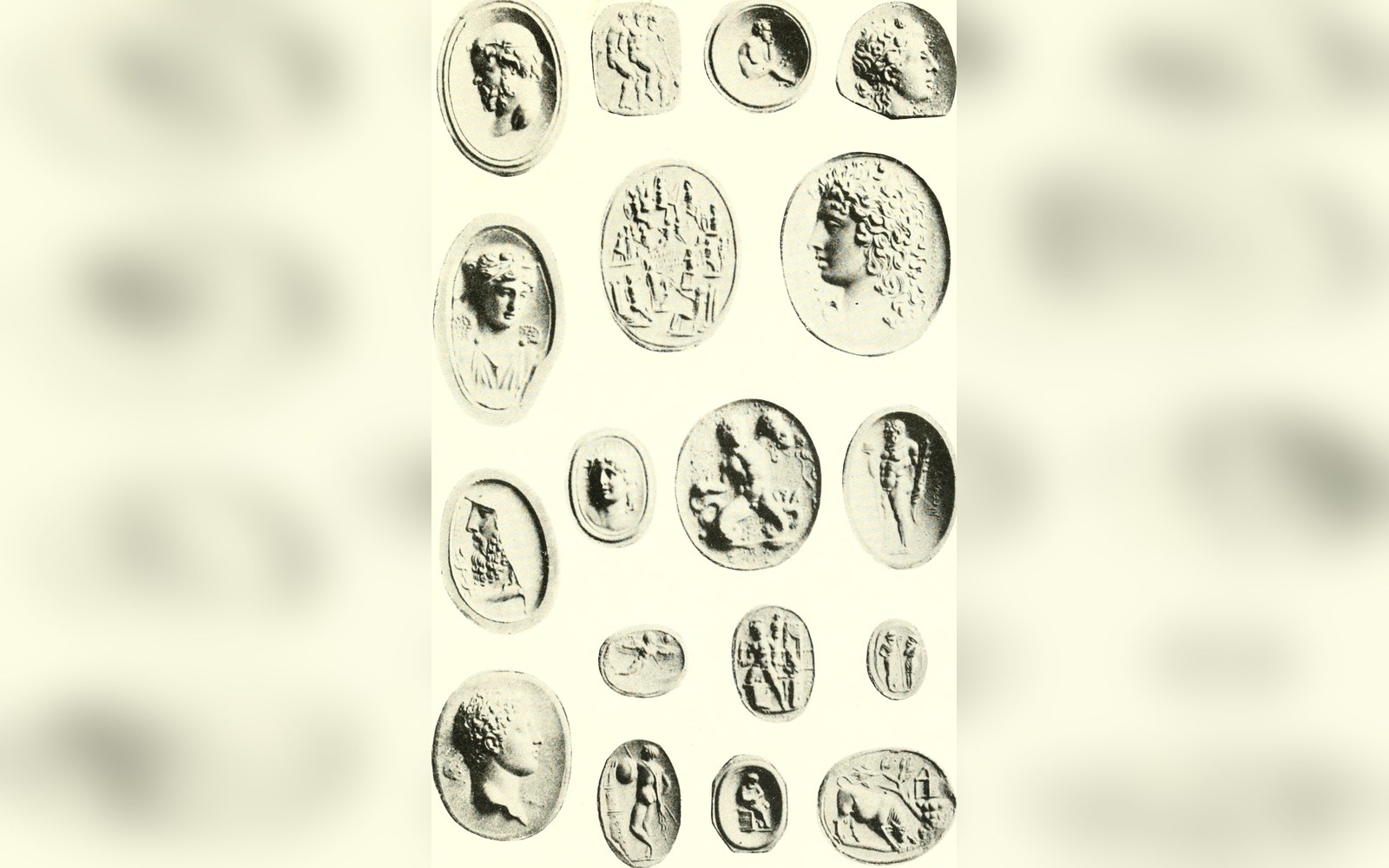
Most of a national gem collection is a numbered tray and a catalogue card rather than a vitrine.
Photo: Annual report of the Board of Regents of the Smithsonian Institution (1904) · Wikimedia Commons
The stone coming out of Sar-e-Sang today is graded by a rough empirical system: nili (deep violet-blue, the most prized), followed by asmani (sky-blue, mid-grade) and a lower grade of paler, more heavily veined stone. Calcite-heavy material — pale and uneven — is traded at lower prices for decorative objects and pigment reproduction. The finest pieces enter the international gem and lapidary trade; material of all grades moves through dealers in Kabul and Peshawar before reaching cutting centres.
No synthetic equivalent replicates the lazurite-calcite-pyrite matrix at scale. Ultramarine pigment has been synthetic since the 19th century, but the carved bowl, the inlaid panel and the polished cabochon still come from the same valley they always have — a narrow fold in the Hindu Kush that has been sending its particular blue outward, in every direction, since before the first dynasty of Egypt.
Related