From Laterite Track to Forty Thousand People
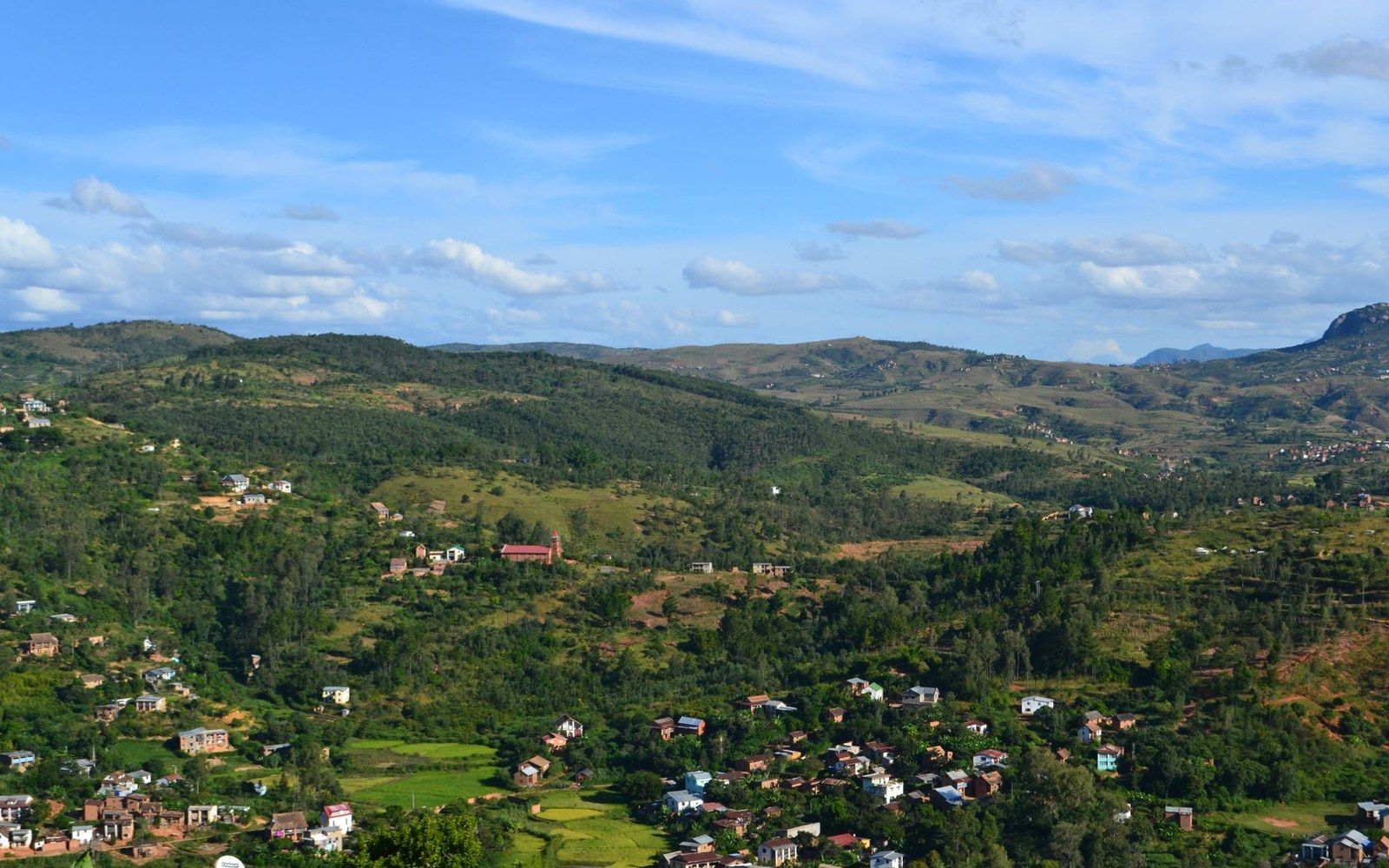
In late 1998, alluvial sapphires were found in the gravels along the Ilakaka River, a minor watercourse crossing the Horombe Plateau in Madagascar's Ihorombe Region. The find was not the result of systematic exploration. A driver stopping on the road between Toliara and Ihosy reportedly spotted the first stones — corundum, aluminium oxide (Al₂O₃) coloured by iron and titanium into the blue range — lying exposed in the laterite. Word moved fast along the RN7, the main north-south highway, and within months diggers were arriving on foot, by bus and by motorcycle from across Madagascar and from the East African gem trade.
By 2000, estimates from field researchers placed the population of the Ilakaka area at between thirty thousand and forty thousand people, almost none of whom had been there two years earlier. What had been a sparsely populated stretch of dry scrub became a ribbon settlement of wooden trading houses, buying offices, and informal mining camps extending several kilometres along the highway. No infrastructure preceded the rush; water, sanitation and law followed slowly if at all.
Also in Mines: The Big Hole Was Dug by Hand in Twenty-Three Years
Photo: Volker Braun / Pexels
The deposit is alluvial — gemstones weathered from primary corundum-bearing metamorphic rocks in the plateau interior and redeposited in river gravels and colluvial fans. Miners worked by hand, sinking narrow shafts through the laterite overburden to reach the gem-bearing gravel layer, a technique familiar from Ratnapura's illam gravel deposits in Sri Lanka, though the Malagasy context lacked the more organised concession framework Sri Lanka had developed over generations.
What the Gravels Yielded
The colour range at Ilakaka proved exceptional. Blue sapphires dominated by volume, but the deposit also produced significant quantities of yellow, orange-yellow, and the pink-to-orange stones the trade calls padparadscha — a colour category that the Gemological Institute of America describes as a pinkish orange to orangy pink hue, a combination rare enough that padparadscha commands a premium independent of carat weight. Ilakaka material entered the market at a moment when demand for coloured sapphires was rising and traditional sources — Mogok in Burma, Ratnapura in Sri Lanka, Pailin in Cambodia — could not expand supply to match it.
The Malagasy stones, however, presented a commercial complication: much of the rough was heavily included and required heat treatment to reach marketable clarity and colour saturation. Heat treatment of corundum is an industry-standard process, documented and disclosed in GIA laboratory reports, but Ilakaka material became closely associated in the trade with heavy treatment, which affected its positioning relative to unheated Sri Lankan or Burmese material. The GIA's grading reports distinguish heated from unheated stones by examining residue in fractures and the character of silk — needle-like rutile inclusions — under magnification.
Formalisation and Its Limits
Madagascar's government had no regulatory framework in place when the rush began. Mining rights were claimed informally, and the early years saw the full range of governance failures characteristic of unregulated artisanal mining: claim jumping, violent disputes, and the near-total export of rough through unofficial channels via Mozambique, Thailand and Sri Lanka. Thailand's Chanthaburi-Trat region, already established as the global centre for sapphire heat treatment and trading, absorbed much of the Ilakaka production.
A 2002 study by the USGS documented Madagascar's emerging position as a significant coloured-stone producer and noted the chaotic conditions at Ilakaka specifically. The Malagasy government subsequently moved to formalise the concession system under mining law, issuing permis de recherche (exploration permits) and permis d'exploitation (extraction permits) to larger operators, while artisanal mining continued under a separate small-scale designation. Enforcement remained inconsistent through the 2000s.
By the mid-2000s, Ilakaka had stabilised into something resembling a permanent gem town. Buying offices operated by Thai, Indian and Sri Lankan traders lined the highway. Madagascar as a whole had become one of the world's leading sources of sapphire rough by volume, a position it retained into the 2020s — built almost entirely on what one driver noticed in a laterite roadcut on a plateau that had no name on most maps in 1998.
Related