The Rock That Made the Valley Famous
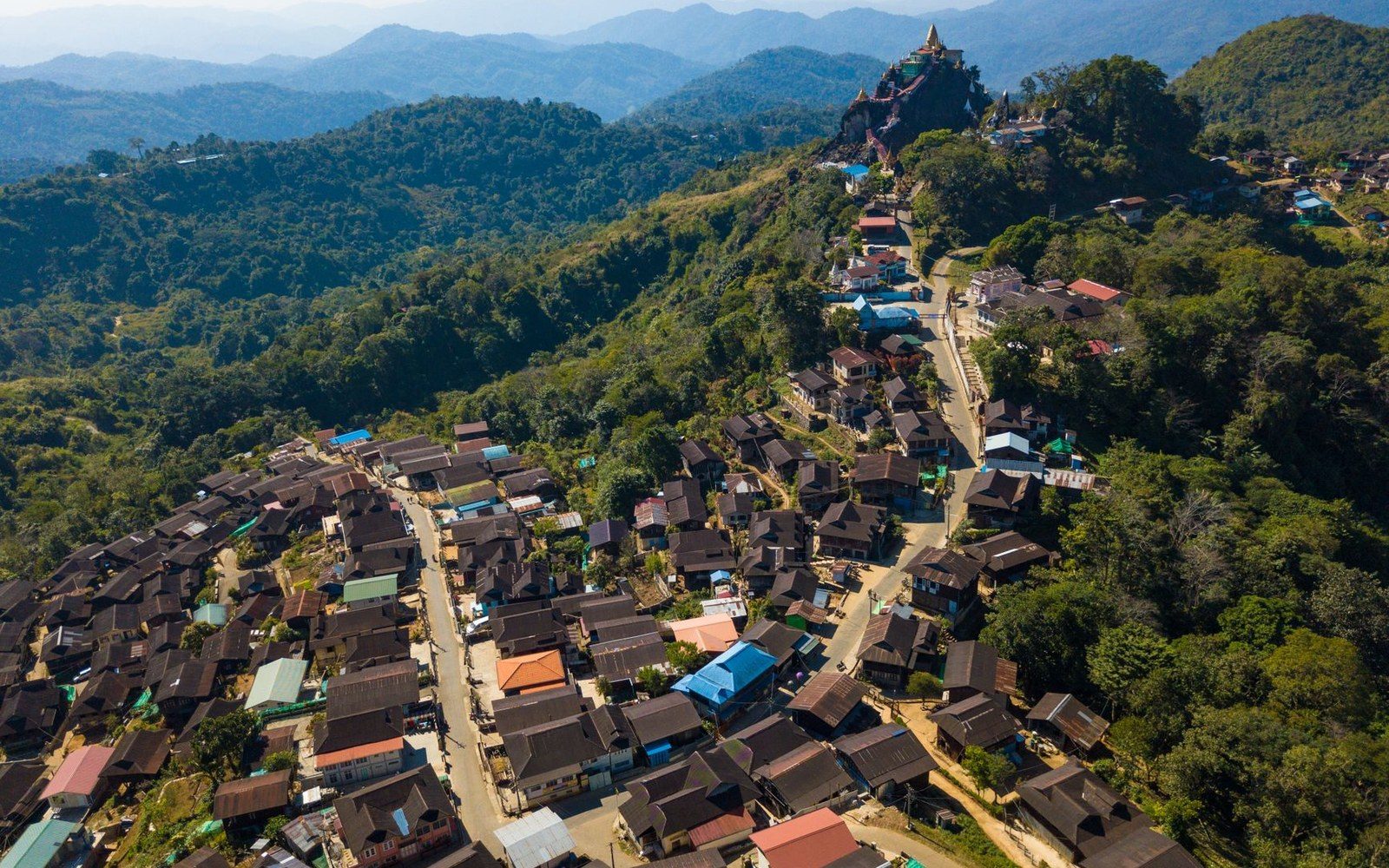
Mogok lies roughly 200 kilometres north-northeast of Mandalay, at an elevation of around 1,160 metres, in a structural basin carved into the Mogok metamorphic belt — a sequence of marbles, gneisses and granitic pegmatites folded and recrystallised during the collision of the Indian and Eurasian plates. The gem-bearing zone has been mapped and studied extensively since the mid-twentieth century, and the consensus in the geological literature is consistent: the critical factor is the marble.
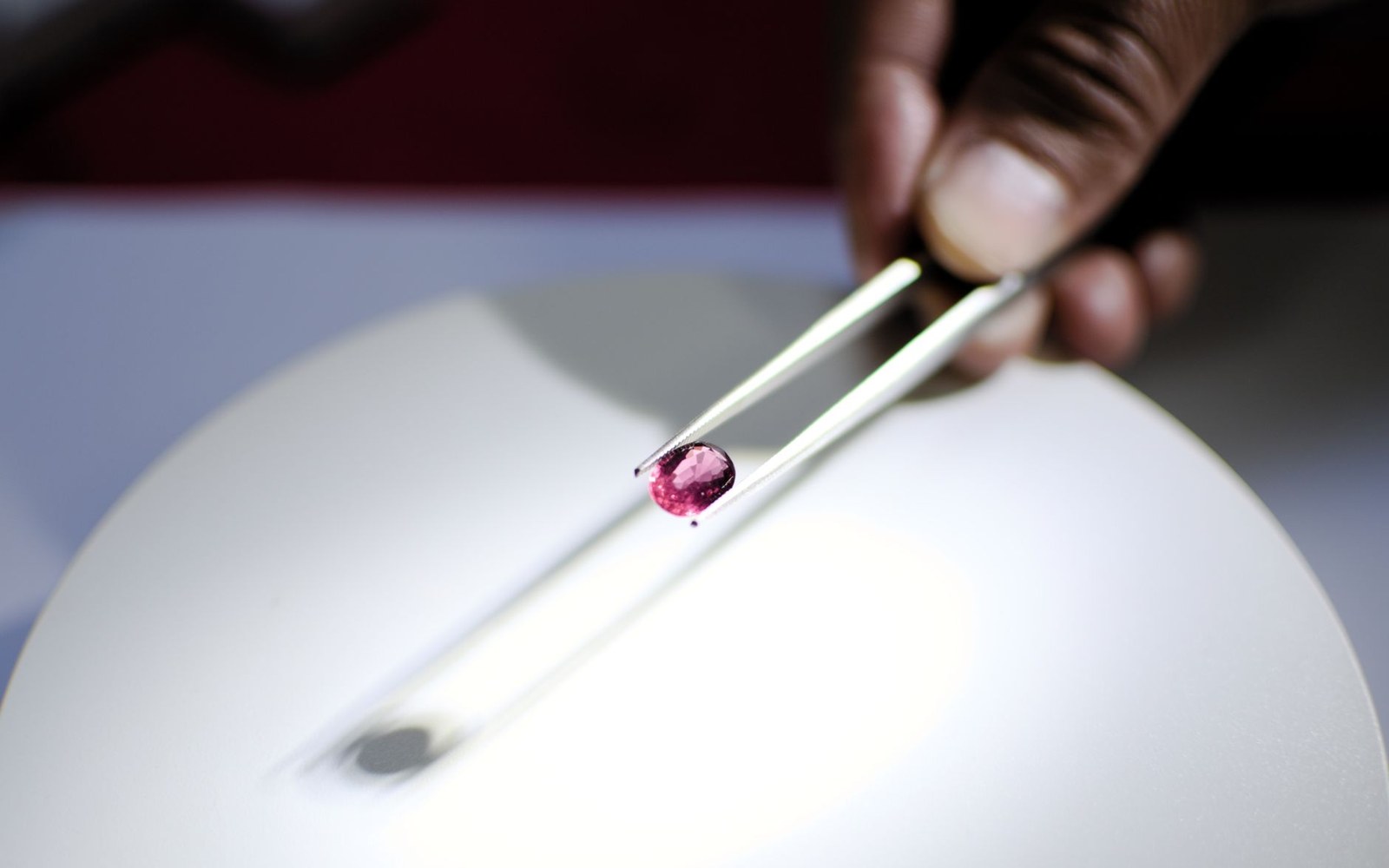
Corundum is aluminium oxide (Al₂O₃), and ruby is corundum coloured by chromium. Chromium ions substitute for aluminium in the crystal lattice, and that substitution produces a strong absorption of yellow-green wavelengths, transmitting red. So far, that is the chemistry of any chromium-bearing corundum. What separates a Mogok ruby from material mined in, say, Thailand or Madagascar is the near-absence of iron in the host marble. Iron in corundum absorbs red light. Even modest iron concentrations suppress the red transmission and push colour toward a darker, more brownish or purplish tone. Mogok marble is a calcium-magnesium carbonate rock poor in iron by geological inheritance, and corundum that crystallised within it inherited those lean iron levels. The result — high chromium, low iron — is a stone that not only transmits red but fluoresces red under ultraviolet and even under the UV component of natural daylight. The fluorescence amplifies perceived colour in sunlight and gives Mogok ruby its characteristic luminous quality, the trade quality sometimes called pigeon's blood, though that phrase has never carried a standardised gemmological definition.
Also in Corundum: Ruby and Sapphire Are One Mineral, and the Trade Knows It
Photo: Jorge Romero / Pexels
The marble formed during high-grade regional metamorphism. Carbonate sediments, originally laid down in a Tethyan marine basin, were buried, heated and recrystallised over tens of millions of years. The corundum likely precipitated from aluminium-rich fluids moving through calcium carbonate rock as it metamorphosed, with chromium and vanadium introduced from adjacent metapelitic layers. Secondary deposits — the gravels and eluvials from which most Mogok production has historically been recovered — formed as the marble weathered and gem minerals concentrated in the residual soils and stream beds of the valley floor. These loose workings, called byon in Burmese, are the traditional artisanal digging sites. Primary hard-rock extraction exists but is secondary in historical output.
Five Centuries in the Trade Record
Documentary evidence for Mogok rubies in the trade runs back at least to the fifteenth century, when the valley was under the administration of the Shan states. The kings of Ava, and later of successive Burmese dynasties, extracted tribute in rubies from Mogok's miners and maintained royal control over the most significant stones. Venetian and Portuguese traders who reached the Bay of Bengal ports in the sixteenth century recorded the gem trade of upper Burma and the movement of rubies toward the Persian Gulf, the Ottoman court and the courts of the Mughal emperors, for whom large Mogok rubies — spinels and true corundum alike — were among the most coveted of all gem materials.
British colonial administration formalised extraction when the Upper Burma Ruby Mines Act of 1887 placed the Mogok workings under a royalty and licensing system. The Burma Ruby Mines Ltd., a British company, operated under government concession from 1889, introducing hydraulic methods and deeper shaft mining. Production records from that concession period, held in part in the India Office records now at the British Library, document the extraordinary volume of material processed — millions of tonnes of gravel — against relatively modest recoveries of gem-quality stones. Most Mogok ruby has always been small; stones above five carats of fine colour are uncommon, and stones above ten carats of genuine pigeon's-blood quality are exceptional in any era.
George Frederick Kunz, the gemologist who spent his career at Tiffany & Co. and documented gem sources with a rigour unusual for his time, noted in his published writings that Mogok material commanded premiums in European markets that no other ruby source could approach. The distinction was colour — specifically the fluorescent saturation — and, at that period, the trade's understanding of it was empirical rather than spectroscopic. It was simply what the best rubies looked like.
The twentieth century introduced complicating factors: Burmese independence, nationalisation of the mines in 1962, and the periodic isolation of the country under military government. The United States imposed import restrictions on Burmese rubies under the Tom Lantos Block Burmese JADE Act of 2008, which prohibited the importation of rubies and jades of Burmese origin into the American market regardless of where they had been cut or traded — a measure that redirected significant trade flows toward European and Asian auction houses. Those restrictions were lifted in 2016 following political changes in Burma, though the country's subsequent political trajectory has again complicated international commerce.
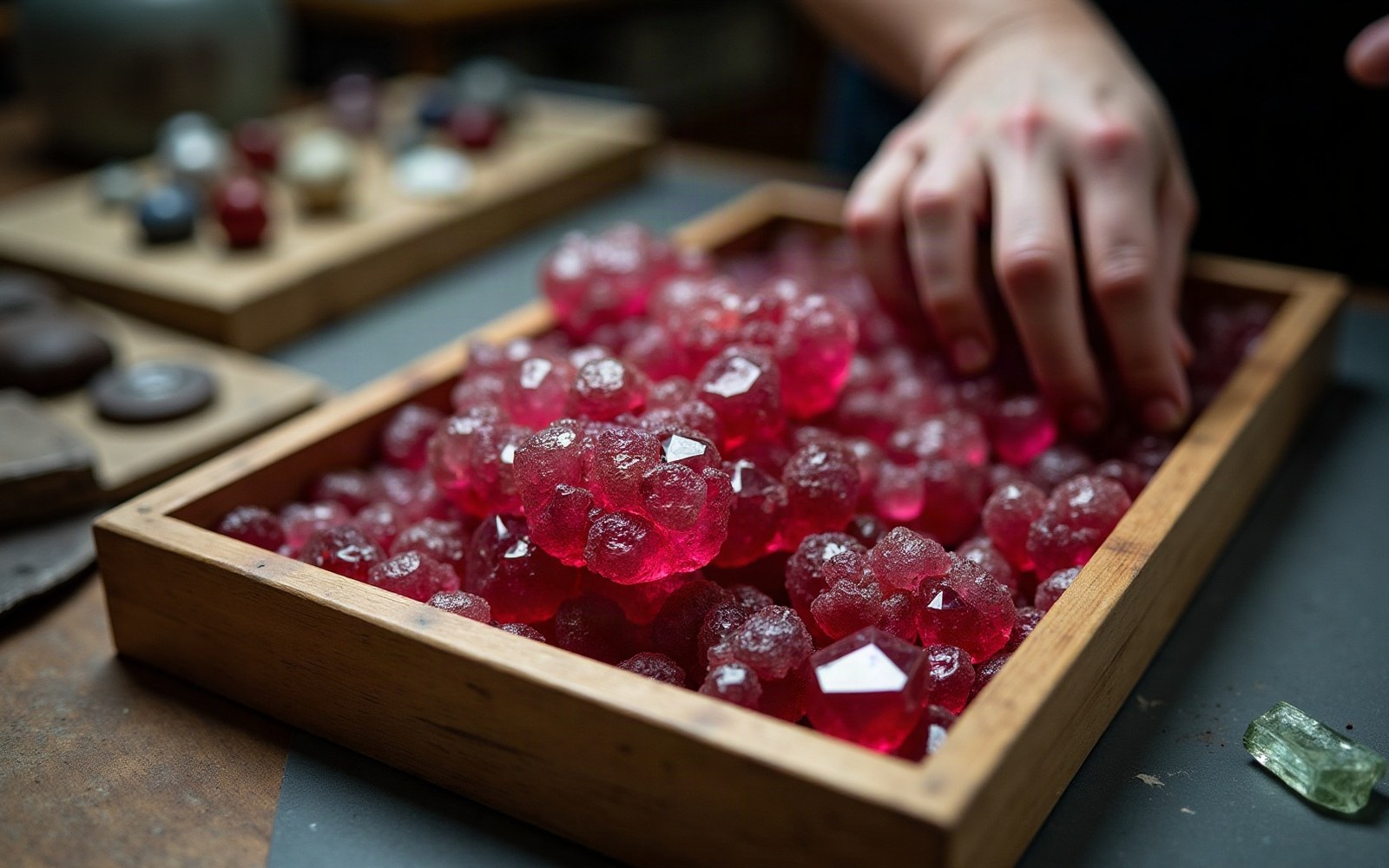
Mogok rough is sorted by eye for fluorescence before it is sorted for size.
What Leaves the Valley, and Where It Goes
Mogok is not a single mine but a district of several hundred square kilometres containing dozens of named sites — Kyatpyin, Thurein Taung, Chaung Gyi, and others — each with particular geological positions and reputations for stone character. The Burmese government's state gem enterprise, Myanmar Gems Enterprise, has co-existed with extensive artisanal and small-scale mining, and the two streams of production have historically been difficult to separate in the international record.
Antwerp and Bangkok are the two principal trading hubs for Mogok material once it leaves Burma. Bangkok in particular functions as a cutting and dealing centre for the broader Southeast Asian ruby supply. The Gemological Institute of America's laboratory issues geographic origin determinations — a service that has grown substantially since the 2008 US restrictions created commercial demand for documented Burmese origin — and GIA's published research on the spectroscopic signatures of Mogok corundum, including characteristic iron/chromium ratios and trace-element profiles measurable by laser ablation mass spectrometry, represents the current technical standard for origin determination.
The marble geology is not unique to Mogok — marble-hosted ruby also occurs at Jegdalek in Afghanistan and at several localities in central and east Africa — but nowhere else has the combination of marble purity, chromium availability and the particular metamorphic history of the Mogok belt produced gem ruby at the scale and consistency that has defined one valley's place in the trade for five centuries. The host rock explains the chemistry; the chemistry explains the colour; the colour is why the name still commands a premium on every major auction catalogue that carries a ruby of consequence.
Related