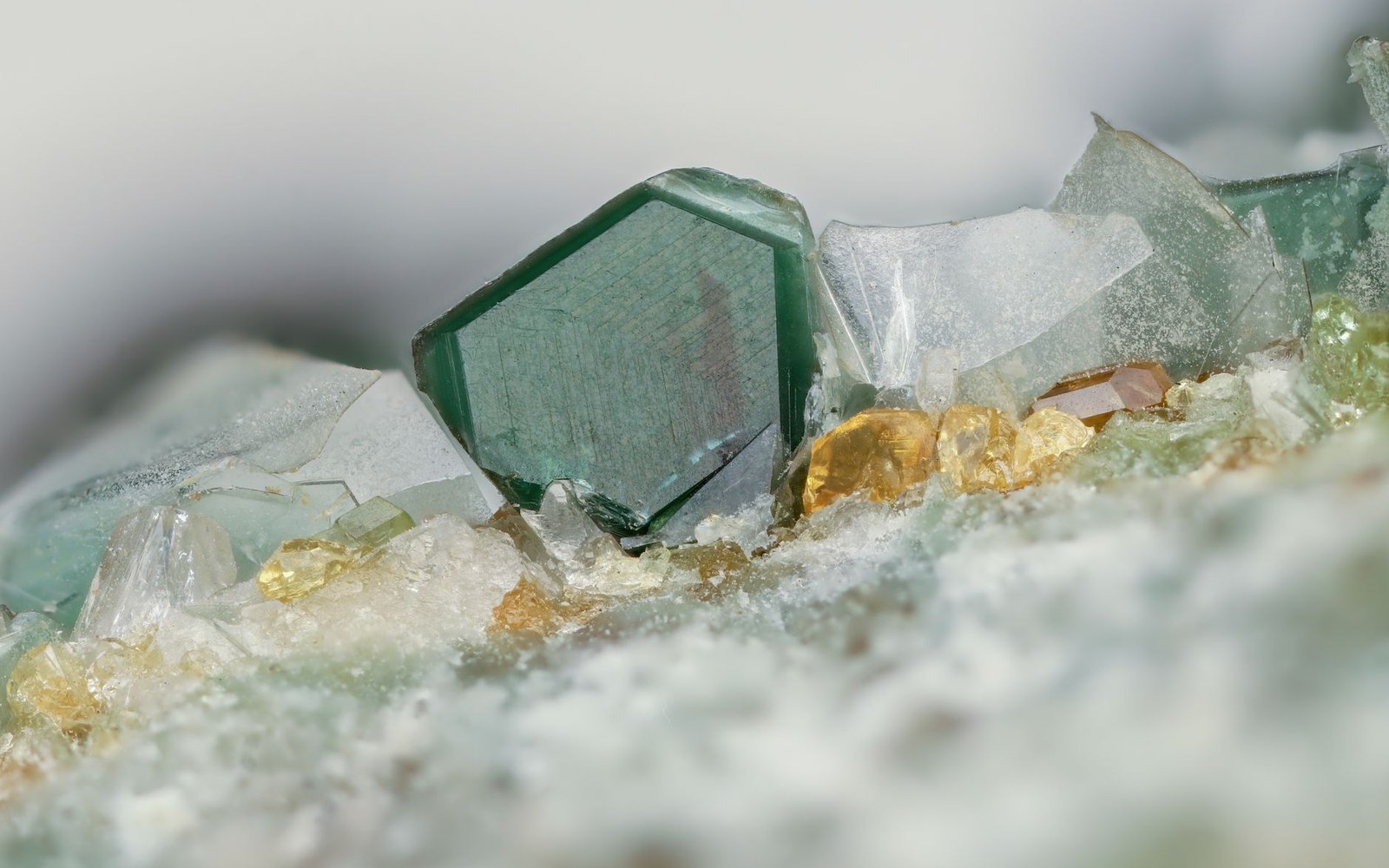
From Schist to Mining Operation
In 1831, a peasant named Maxim Kozhevnikov found green crystals exposed by fallen tree roots roughly 80 kilometres east of Yekaterinburg, in what is now the Sverdlovsk Oblast. The deposit sat within mica schist — specifically a chromium-bearing talc-chlorite schist — where late-stage beryllium-rich fluids from granite pegmatites had migrated into adjacent ultramafic rock. That ultramafic rock, a serpentinite, supplied the chromium responsible for the characteristic green. The Ural mechanism differs from Colombian geology, where beryllium and chromium both come from hydrothermal fluids interacting with black shale rather than from a granite–ultramafic contact.
The Russian state moved quickly. Imperial mining operations were established at what became the Malysheva locality in Sverdlovsk Oblast, and extraction continued — interrupted by the Soviet period's reorganisation rather than exhaustion — into the modern era. The Malysheva mine, located near the village of the same name, remains the only producing emerald mine in Europe.
Ural material is identifiable in the laboratory by its iron content, which tends to run higher than in Colombian stones, imparting a slightly bluish or yellowish cast that trained observers noted as a distinguishing feature well before spectroscopic confirmation. Colombian emeralds from Muzo and Chivor derive their colour from chromium and vanadium in a low-iron host, yielding the warmer, purer green the trade has historically prized. Neither origin is chemically interchangeable, and the GIA now offers origin determination as a laboratory service precisely because the distinction carries market weight. Fluid inclusions — the composition of trapped parent fluid inside the crystal — are among the primary diagnostic features separating Ural from Colombian and other origins, a methodology documented in the gemological literature for several decades.
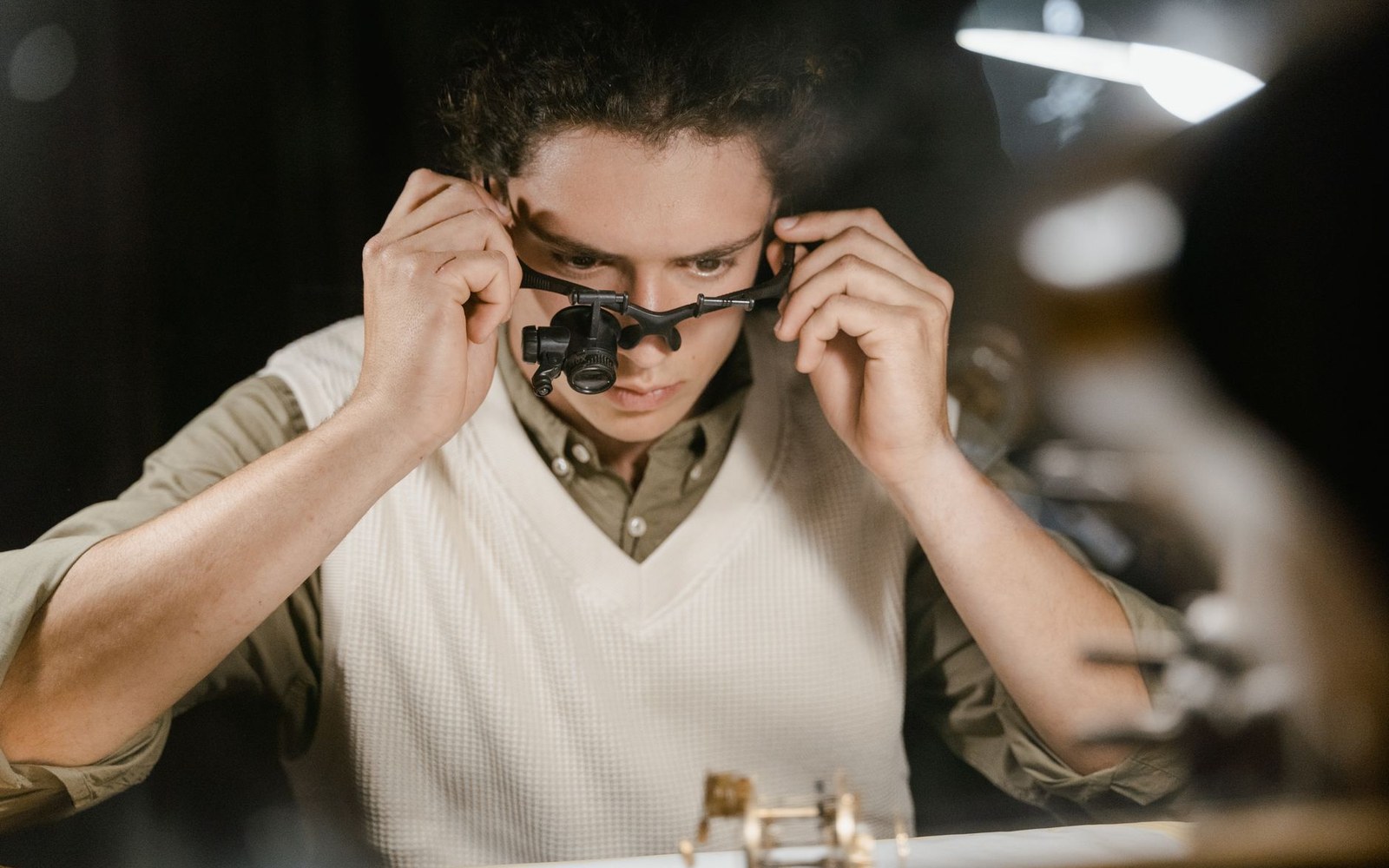
Ten-power magnification is the standard the trade grades emerald clarity at, and the jardin is expected to be visible in it.
Photo: Tima Miroshnichenko / Pexels
Related