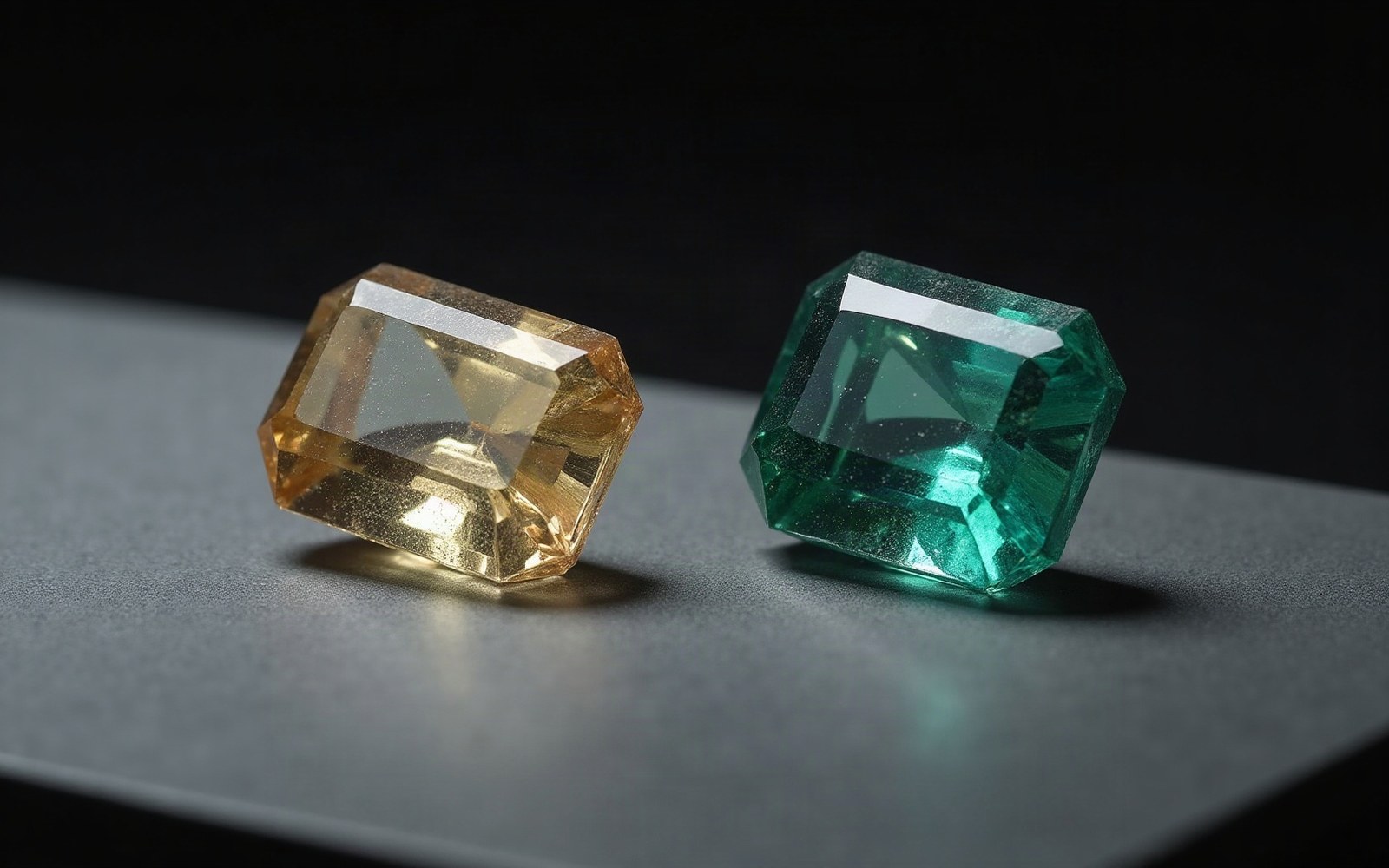
From Grinding Wheel to Geometry
The rose cut emerged in Antwerp workshops sometime in the mid-sixteenth century, almost certainly among the Flemish craftsmen who had dominated diamond working since the city became the clearing house for stones arriving from India via Portuguese trading routes. Its geometry is immediately recognisable: a flat base — often left entirely uncut — a domed crown rising to a low apex, and a surface of triangular facets typically arranged in multiples of six. No pavilion exists beneath the girdle; the stone sits on its table like a blister on the finger of a ring. That flat base reflects a simple economic logic. Early lapping wheels, driven by foot treadle and lubricated with olive oil and diamond dust, were capable of polishing flat surfaces reliably. A curved pavilion demanded control that the period's equipment could not consistently deliver, and so the cutter left the base alone and concentrated ornamental geometry on the visible dome.
Lighting is the second constraint the rose cut encodes. Sixteenth- and seventeenth-century interiors were lit by candle and oil lamp — low, warm, directional sources. A rose cut does not return light to the eye in the systematic way Marcel Tolkowsky would calculate for the round brilliant in 1919; it scatters it softly, catching flame-light at glancing angles across each triangular facet. The result is shimmer rather than fire, flattering in candlelight and decidedly flatter under daylight. That the rose cut remained fashionable through the seventeenth century — and was reproduced in extraordinary numbers in the silver jewellery of Mughal India and the Ottoman court — indicates how well it was matched to its actual conditions of display.
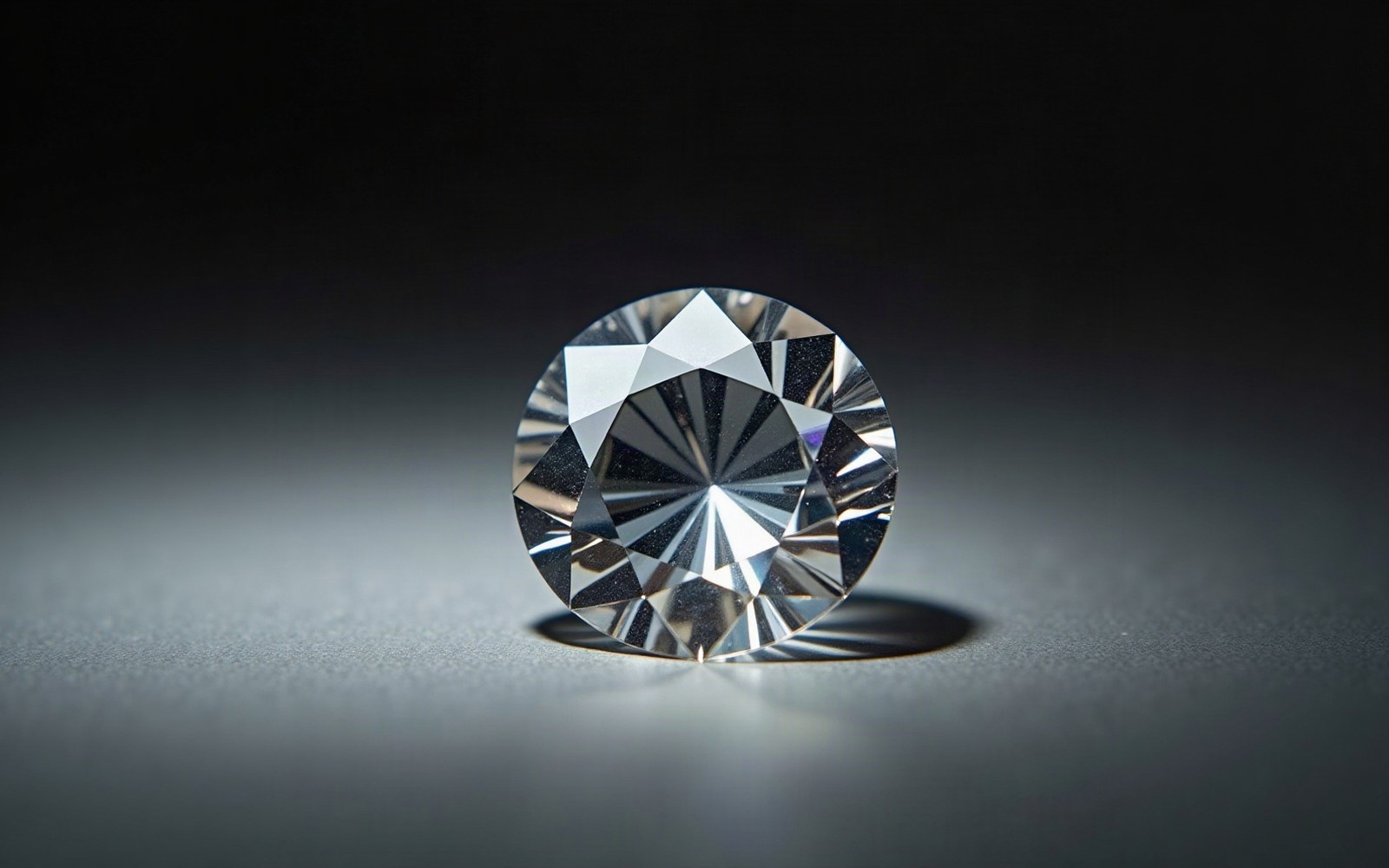
Also in Cutting: Three Numbers from 1919 That Nobody Has Managed to Improve On
The Old Mine Cut and the First Steps Toward Proportion
By the early eighteenth century, as diamonds from the Golconda region of India gave way to material from the newly discovered Brazilian deposits in Minas Gerais, cutters in Antwerp and Amsterdam were experimenting with what the trade now calls the old mine cut. The outline followed the natural octahedral crystal rather than any calculated ideal, producing the characteristic cushion shape. The crown was high, the culet — the bottom facet — was large enough to appear as a dark circle when the stone was viewed face-up, and the table was small relative to the diameter. There were typically fifty-eight facets, a number that would survive unchanged into the modern brilliant, though their proportions bore no mathematical relationship to the behaviour of light in diamond.
The old mine cut is sometimes treated as a primitive precursor to what came after, but that framing misreads it. Its high crown and open culet were rational responses to two real problems: the tools available for facet placement were not precise enough to control angles within tight tolerances, and the large culet prevented the tip of the pavilion from chipping during the cutting process itself. A damaged culet in a large stone was a commercial catastrophe, so cutters left it blunt. The stones were worn, again, largely by candlelight, and in that environment a high crown — by gathering more light across its steeper angles — produced an acceptable brightness even without optimised refraction.
The instrument that would eventually make systematic proportion possible, the goniometer, had been adapted for mineralogical use by the early nineteenth century, allowing facet angles to be measured with genuine precision. Yet the transition from old mine to modern brilliant was gradual. Steam-driven bruting machines, introduced in the 1870s, allowed round outlines to be produced consistently for the first time; before that, the cushion shape of the old mine cut was partly a consequence of working the rough by hand. The Premier Mine discovery in Transvaal in 1902 and the subsequent reorganisation of the cutting trade in Antwerp and the rising centre of Surat, Gujarat accelerated the shift toward the round brilliant, whose proportions Tolkowsky derived mathematically from the refractive index and dispersive power of diamond.
What the rose cut and the old mine cut share — and what distinguishes them from everything that followed — is that neither required a calculation. They were solutions to practical problems arrived at empirically, by craftsmen working at the limits of what their laps, their light sources and their eyes could reliably achieve. The arithmetic came later, and it changed everything.
Related